Lights, Camera, Create: When Documenting Your Art Becomes the Art

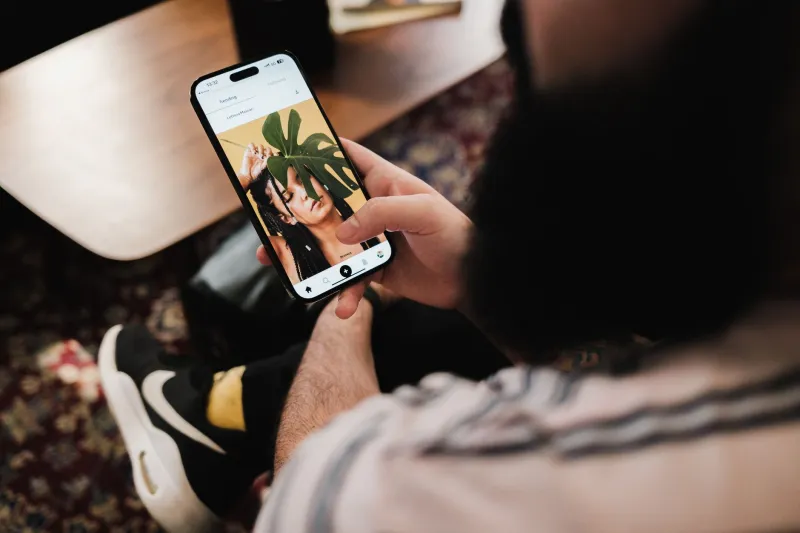
Photo by Photo by Joshua Wann on Unsplash on Unsplash
There's a particular kind of video that lives rent-free on every creative corner of the internet. You know the one. An artist sits at a wide wooden desk, golden-hour light pouring through a window that seems suspiciously well-positioned. They pick up a brush, or open a sketchbook, or crack their knuckles over a keyboard. They look contemplative. A little tortured, even. The caption reads something like: just letting myself explore today. The video is edited, color-graded, and set to an instrumental track that costs twelve dollars a month to license.
This is what we're calling process now.
And look — nobody's villainizing the creators who make this content. The economics of being an independent artist in 2025 basically demand that you become a content machine alongside being a creative one. But somewhere between the genuine impulse to share and the algorithmic reward for doing so, something got lost. The studio became a set. The sketchbook became a prop. And the messy, ugly, directionless hours that actually produce interesting work? Those mostly happen off-camera.
The Paradox of Radical Transparency
The pitch for sharing your process was always about authenticity — pulling back the curtain, demystifying creativity, connecting with an audience on a human level. And for a while, it worked beautifully. Early YouTube art channels genuinely changed how people understood what went into a finished piece. Watching someone struggle, abandon a direction, and start over was instructive and, honestly, kind of thrilling.
But here's where it gets complicated: transparency, when it becomes a deliverable, stops being transparent. The moment you're thinking about how a creative choice will read on camera, you're no longer purely making a creative choice. You're producing content about making a creative choice. Those are fundamentally different activities, and conflating them has real consequences for what gets made.
The romanticization of the "messy process" is particularly worth examining. The internet has developed a real appetite for creative struggle — the crumpled paper, the abandoned canvas, the frustrated sigh caught on a ring light. But this aesthetic of productive mess is still an aesthetic. It's still curated. Real creative failure — the kind where you spend three weeks on something and realize it's conceptually broken, or where you can't figure out why something isn't working — doesn't make for compelling short-form content. So it doesn't get shown. And increasingly, it doesn't get risked.
What You Won't Try When Everyone's Watching
Talk to working artists outside the content-creation ecosystem — the ones showing in smaller galleries, doing residencies, working in mediums that don't photograph well — and a pattern emerges. Experimentation requires privacy. Not secrecy, exactly, but a protected space where something can be genuinely bad before it has a chance to become good.
When your studio practice is also a content strategy, that space shrinks. You start gravitating toward processes that are visually legible, that have a satisfying arc, that resolve within a timeframe your audience will tolerate. Ceramics over conceptual installation. Illustration over performance art. Anything with a clear before-and-after.
This isn't a moral failing — it's a rational response to incentive structures. If your livelihood depends partly on engagement, you're going to make choices that generate engagement. But the cumulative effect on what independent artists are willing to attempt is worth taking seriously. We might be trading a generation of genuinely weird, difficult, uncommercial work for a generation of extremely well-documented competent work. And competent work, however beautifully filmed, rarely changes anything.
The Audience That Moved Into the Studio
There's a concept in psychology called the observer effect — the idea that the act of observing something changes the thing being observed. It was originally about particle physics, but it applies here with uncomfortable precision. When artists know they're being watched, they perform being artists. Not cynically, necessarily. Often quite sincerely. But performance and creation are different modes, and switching between them mid-process has a cost.
Some creators have found workarounds. Working in private and only sharing finished documentation. Maintaining a strict separation between their social presence and their actual practice. Building audiences around ideas and commentary rather than real-time process. These are all legitimate strategies, but they require a level of platform savvy and financial cushion that not every emerging artist has.
For the creators who are still figuring it out — who are building an audience and a practice simultaneously — the pressure to make the process legible can quietly shape the process itself. You start thinking in thumbnails. You develop a sensitivity to what your audience responds to that isn't always the same as what your work actually needs.
Reclaiming the Off-Camera Hours
None of this means the documentation impulse is inherently corrupting. There are artists doing genuinely interesting things with the form — using the process video as its own creative medium, being explicitly self-aware about the performance of authenticity, or finding ways to share the unglamorous reality of creative work without packaging it into content.
But the broader cultural conversation about creative authenticity needs to catch up with what's actually happening. When we praise an artist for "showing their work," we should be asking: which work? The performed version of the process, or the actual one? When we celebrate the democratization of creative visibility, we should be asking what kinds of creativity are getting more visible, and what kinds are being quietly discouraged.
The artists who are doing the most interesting work right now might not be the ones with the most compelling studio vlogs. They might be the ones who've made peace with being a little less documented, a little less legible, and a lot more free to make something that nobody asked for yet.
That's harder to monetize. It's also harder to replicate. And in a creative landscape that's increasingly optimized for both, that difficulty might be exactly the point.