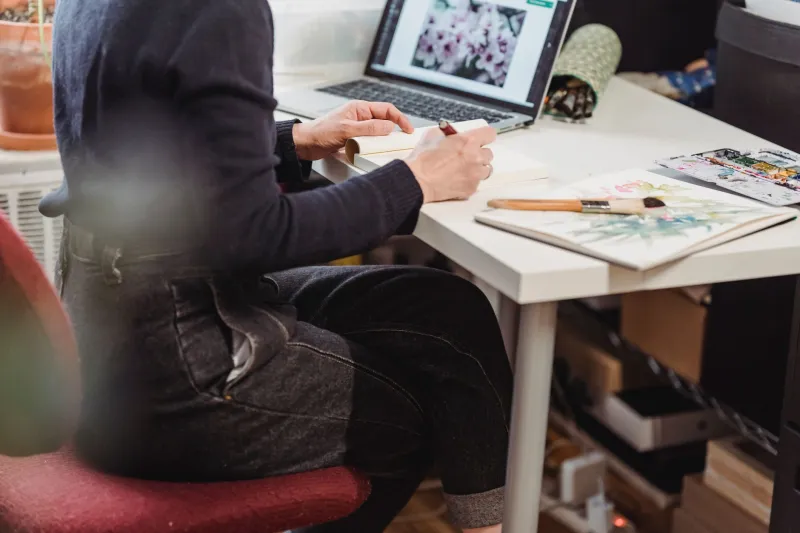
What Your Designer Is Making at 2 A.M. (And Why It Matters More Than Their Portfolio)
Photo: IthakaDarinPappas, CC BY 4.0, via Wikimedia Commons
Ask a designer to open their laptop and show you the work they're proud of, and you'll usually get the highlight reel: the brand system for the fintech startup, the packaging refresh that shipped, the case study with the tasteful mockups on a beige background.
Ask them what they made last Tuesday at two in the morning, and the room changes.
There's a whole shadow economy of creative labor happening off the clock — the glitchy zines, the typefaces named after exes, the sprawling illustrated worlds nobody will ever pay for. And if you pay attention to what designers make when nobody's watching, you start to notice something uncomfortable for the industry: the hidden stuff is usually about eighteen months ahead of the paid stuff.
The Portfolio Is a Costume
A professional portfolio is, fundamentally, a job application that never stops being submitted. Every piece is curated to answer a client's unspoken question: can this person make my thing look trustworthy?
That's a real constraint, and it shapes everything. Risky type choices get sanded down. Weird personal obsessions get cropped out. The result is work that's competent, legible, and — increasingly — identical to everyone else's.
The secret work operates under no such constraint. Nobody's grading it. Which means it's the only place a working designer can actually experiment.
A Brooklyn-based art director I'll call M. keeps a side practice making brutalist concert posters for shows that don't exist. Her day job is designing clean e-commerce experiences for a major retailer. Last spring, her retailer launched a campaign with deliberately raw, photocopy-textured typography. M. had been posting that exact visual language to her private Instagram for two years.
She didn't leak it. The culture just caught up to her.
Why the Underground Wins the Timing Game
There's a simple structural reason for the lag: commercial design is reactive. It looks at what already feels fresh and industrializes it. By the time a trend shows up in a national campaign, it's been circulating in personal work, niche communities, and late-night experiments for a long while.
Designers with secret practices are essentially running a live feed from the future. They're making the work they wish someone would commission, using instincts they can't monetize yet.
Look at the current wave of maximalist, hand-drawn, gloriously imperfect branding that's taken over from the flat corporate minimalism of the 2010s. You could watch it coming for years in the sketchbooks and side projects of designers who spent their days pushing rounded sans-serifs onto startup landing pages.
The Guilt Economy of Side Work
Here's the part nobody says out loud: a lot of designers feel ashamed of the secret portfolio. There's a lingering belief that personal work is what you do when you can't get real work — a consolation prize.
That framing is backwards. The unpaid work is where taste gets forged. Client work pays the bills, but it rarely teaches you anything you didn't already know how to do. The weird zine forces you to solve problems no brief will ever hand you.
Some of the most interesting studios in the country have figured this out. They ask about personal projects in interviews. They build slack time for self-initiated work. They understand that a designer's hidden practice is basically free R&D.
Most companies, though, still treat a designer's side projects as a conflict of interest rather than a creative asset. Which says more about those companies than it does about the designers.
What to Do With This
If you hire creative people: ask what they make for fun. Look at it seriously. The thing they can't stop making is the clearest signal of where their eye is going — and where visual culture is going with it.
If you're a designer: stop treating the secret portfolio as a guilty pleasure. It's the most honest body of work you have. At some point, the industry catches up to everything in it. It always does.
The two a.m. work isn't a hobby. It's a forecast.