Who Decides What's Good? The Hidden Power Structure Behind Cultural Taste
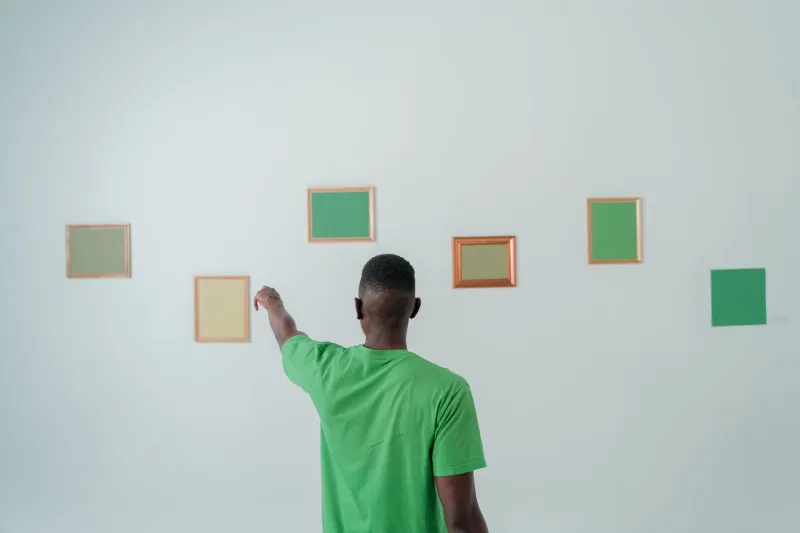
Let's start with a thought experiment. You make something — a painting, a design object, a short film, a music project. It's genuinely good. You know it's good. A handful of people who've seen it know it's good. Now what?
If your answer involves anything other than a specific set of institutions, platforms, and human validators giving it their blessing, you're going to be waiting a while. Because for all the noise about democratized culture and the death of gatekeeping, the machinery that decides what gets called significant is still very much operational. It's just been renovated. New lobby, same building.
The Old Guard Never Left — They Just Got Instagram Accounts
The traditional cultural gatekeeping infrastructure — major museum acquisitions, legacy publication reviews, gallery representation in a handful of zip codes — still exists and still matters enormously. A solo show at a New York or LA institution still carries a legitimizing weight that five hundred thousand TikTok followers genuinely cannot replicate, at least not in contexts where institutional credibility is the currency being spent.
But the more interesting story is what happened alongside those traditional structures. A new tier of tastemakers emerged — the kind who operate through curated feeds, newsletter recommendations, and the particular social capital of being the person who knew about something first. These figures aren't critics in the traditional sense. They don't necessarily have institutional affiliations or formal credentials. What they have is audience trust and an aesthetic sensibility that their followers have decided to defer to.
This sounds like democratization. In some ways it is. But here's the thing about informal power: it's often less accountable than formal power. When the Whitney acquires a piece, there's at least a nominal institutional process. When a major taste-making account decides an artist is worth amplifying, the criteria are entirely opaque. The result is that cultural legitimacy has become, in some ways, more concentrated and more arbitrary than it was before — just distributed across a different set of hands.
Algorithms Are Not Neutral Curators
Then there's the platform layer, which is where things get genuinely complicated. Algorithmic recommendation systems have become de facto cultural curators for enormous portions of the population. What Spotify's editorial playlists feature, what appears in Instagram's Explore tab, what YouTube's recommendation engine serves up next — these decisions shape cultural exposure at a scale no individual critic or institution ever achieved.
And those decisions are not neutral. They're made by systems optimized for engagement, which tends to favor the familiar over the challenging, the immediately legible over the demanding, and content that performs well in the first thirty seconds over work that rewards sustained attention. This is a particular kind of taste, and it's being applied at civilizational scale.
The artists who thrive in this environment are often the ones who've learned to game it — not by making bad work, necessarily, but by making work that's been calibrated to platform logic. There's a real skill in that. But it's a different skill than making work that's formally rigorous or conceptually ambitious, and the two don't always coexist comfortably.
The Geography of Legitimacy
For emerging artists navigating all of this, geography still matters in ways that the "everything is online now" narrative tends to obscure. Being physically present in certain cities, attending certain events, knowing certain people — these remain significant accelerants for cultural recognition in ways that are rarely discussed openly because they're uncomfortable to acknowledge.
The tastemaking ecosystem in the US is still heavily concentrated in New York, Los Angeles, and a handful of other metros. An artist in Memphis or Albuquerque making genuinely extraordinary work faces structural disadvantages that have nothing to do with the quality of what they're making. The internet has made it easier to show that work to the world, but the human networks through which cultural legitimacy actually flows remain stubbornly geographic.
This is one of the sharper contradictions in contemporary creative culture: we have global distribution and local gatekeeping. The content can travel anywhere; the validation still largely can't.
What Emerging Artists Are Actually Up Against
So what does this mean practically for someone trying to build a creative career in 2025? It means navigating multiple simultaneous legitimacy systems that don't fully recognize each other. Platform success doesn't automatically translate to institutional recognition. Institutional recognition doesn't automatically translate to audience. Critical praise doesn't automatically translate to income. And none of these things automatically translate into the kind of peer respect that matters within specific creative communities.
The artists who manage to build durable careers typically find traction in at least two of these systems — enough institutional credibility to be taken seriously by the contexts that care about that, enough platform presence to maintain visibility, enough community respect to sustain the relationships that lead to opportunities. Threading that needle requires a kind of strategic intelligence that has nothing to do with creative ability and everything to do with understanding how power actually flows in cultural spaces.
This is exhausting in a way that doesn't get talked about enough. The creative labor is only part of the job. The navigation labor — figuring out whose attention matters, how to get it, and how to translate it into something durable — is substantial and largely invisible.
Taste as Infrastructure
Here's the frame that feels most useful: taste is infrastructure. Like all infrastructure, it shapes what's possible without most people thinking much about it. The roads determine which towns grow and which ones don't. The taste infrastructure — who has the power to confer legitimacy, through which channels, according to which criteria — determines which creative visions get developed and which ones get abandoned.
Challenging that infrastructure doesn't mean arguing that everything is equally good or that standards don't matter. It means being honest about who sets the standards, whose sensibilities they reflect, and what kinds of work get systematically undervalued as a result. It means building alternative legitimacy structures that aren't just the old hierarchy in new clothing.
Some of that is already happening — artist-run spaces, cooperative publishing ventures, community-based exhibition models, curatorial projects that explicitly center voices the mainstream tastemaking apparatus has historically ignored. These aren't perfect solutions, but they're genuine experiments in what it looks like to distribute the power to say this is good more broadly.
The taste cartel isn't going anywhere on its own. But it can be competed with, complicated, and eventually — maybe — redesigned.


