Broken and Branded: How 'Being Real' Became the Slickest Marketing Move in the Room
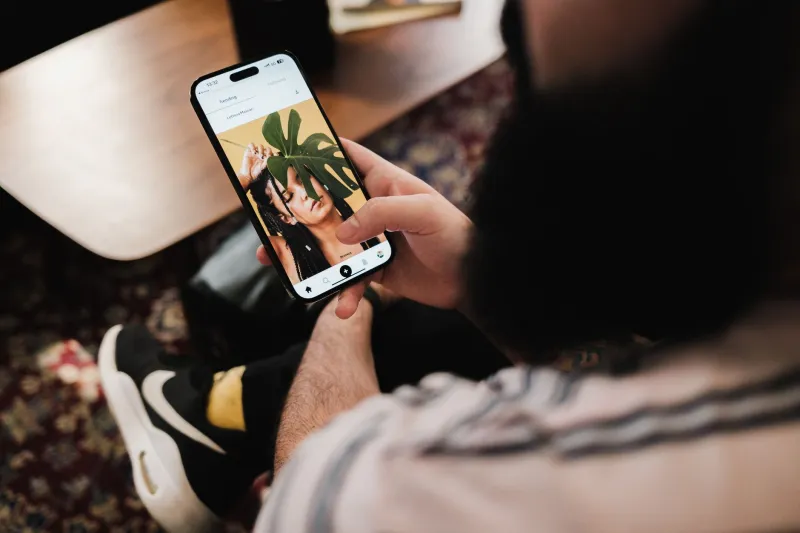
There's a particular kind of post that's basically its own genre now. You've seen it. The creator — artist, designer, writer, whoever — sits down in front of a camera or opens a notes app screenshot and says something like: I almost quit. I was struggling. I didn't think I was good enough. And then, inevitably, they didn't quit. They pushed through. The work got made. The lesson was learned. The caption ends with something like "if this resonates, share it with someone who needs it."
It's moving, sometimes. It's also, increasingly, a formula.
The mainstreaming of vulnerability as a creative currency didn't happen by accident. It was, in many ways, a direct reaction to the polished highlight-reel culture of early social media — the perfectly staged flat lays, the aspirational brand aesthetics, the relentless projection of success. Audiences got tired of it. They wanted something that felt human. And so the market responded, the way markets always do: it packaged humanity and sold it back.
The Pivot to 'Raw'
Around the mid-2010s, a noticeable shift happened across creative communities online. Admitting struggle became not just acceptable but advantageous. Engagement spiked on posts about rejection, burnout, and creative block. Podcasts built entire audiences on the premise of artists admitting they didn't have it figured out. Newsletters thrived on dispatches from the messy middle of a creative process.
None of that is inherently bad. There's genuine value in normalizing the difficulty of creative work, in puncturing the myth that talent arrives fully formed and effortless. But the moment vulnerability proved its ROI, it entered the content pipeline — and once something enters the content pipeline, it gets optimized.
Now we have crying selfies that go up within hours of whatever prompted the tears. We have "honest" behind-the-scenes footage that was shot, edited, and scored before it was posted. We have creators publicly processing grief, failure, and mental health struggles in real time — and then, in the next breath, linking to their Patreon or their course or their new merch drop.
The question isn't whether those creators are lying. Many of them are genuinely going through something. The question is whether the act of broadcasting it, shaping it for an audience, and attaching it to a personal brand changes what it actually is.
Honesty With an Agenda Is Still an Agenda
Here's the uncomfortable part: there's no clean line between authentic expression and performance. Every artist who has ever made work about their own life — every confessional poet, every autobiographical filmmaker, every diarist who ever imagined a reader — has been engaged in some version of this negotiation. Turning private experience into public art is as old as art itself.
But the social media context introduces something different: immediacy, metrics, and the feedback loop of audience response. When you post about your creative failures and watch the likes roll in, your brain registers that as reward. The next time you fail — or feel something that could read as failure — there's already a pathway carved. You know what to do with it. You know how to frame it. You know which details land.
That's not dishonesty, exactly. It's something more insidious: it's the slow colonization of your inner life by your content strategy.
Designers and visual artists face a version of this that's almost painfully ironic. The aesthetic of rawness — the unfinished sketch shared to Stories, the "ugly" draft posted alongside the final piece, the chaotic studio tour — has become its own highly refined visual language. There are lighting setups for looking unlit. There are ways of photographing creative mess that make it look good. The performance of not-performing has its own craft, its own rules, its own gatekeeping.
What Gets Lost in the Translation
The deeper cost isn't to the audience — it's to the creator. When every difficult moment becomes potential content, you start to lose access to the parts of your experience that don't translate. The failures that are too boring, too mundane, too genuinely ugly to package. The creative dead ends that don't have a redemptive arc. The stretches of confusion and mediocrity that don't resolve into a lesson.
Those are, arguably, the most real parts of making things. And they're almost entirely absent from the vulnerability industrial complex, because they don't perform.
What we get instead is a kind of curated imperfection — struggle with a narrative shape, failure with a punchline, honesty with a hook. It's relatable in the way that a well-cast TV character is relatable: carefully constructed to feel like you.
Some creators are starting to push back, though it's a quiet rebellion. Pulling back from posting. Keeping certain projects entirely offline until they're finished — or forever. Refusing to document the process. Sitting with the failure without turning it into a thread. It looks, from the outside, like absence. But it might actually be the most radical act of creative self-preservation available right now.
The Question No One Wants to Ask
If you're a creator reading this, here's the thing worth sitting with: when was the last time you experienced something difficult and didn't think about how you'd talk about it online? When was the last time a creative setback existed only for you, with no audience, no framing, no potential caption?
That gap — between living something and immediately translating it for consumption — is where a lot of artistic honesty goes to die. Not because creators are cynical or fake, but because the infrastructure of contemporary creative life makes that translation almost automatic.
True artistic honesty has always been uncomfortable. It's supposed to be. It resists easy packaging, it doesn't always resolve, and it often makes the person expressing it look worse, not better. The vulnerability that gets rewarded online is, almost by definition, the kind that ultimately makes you look good — brave, self-aware, resilient. The rest gets left on the cutting room floor.
That's not realness. That's editing. And there's nothing wrong with editing — unless you've convinced yourself, and your audience, that what they're seeing is the uncut version.
The authenticity trap isn't that creators are being fake. It's that the tools we've built for sharing our inner lives have made it nearly impossible to tell the difference — even from the inside.