Serve the Few, Move the Many: How Micro-Audiences Are Rewriting the Rules of Creative Success
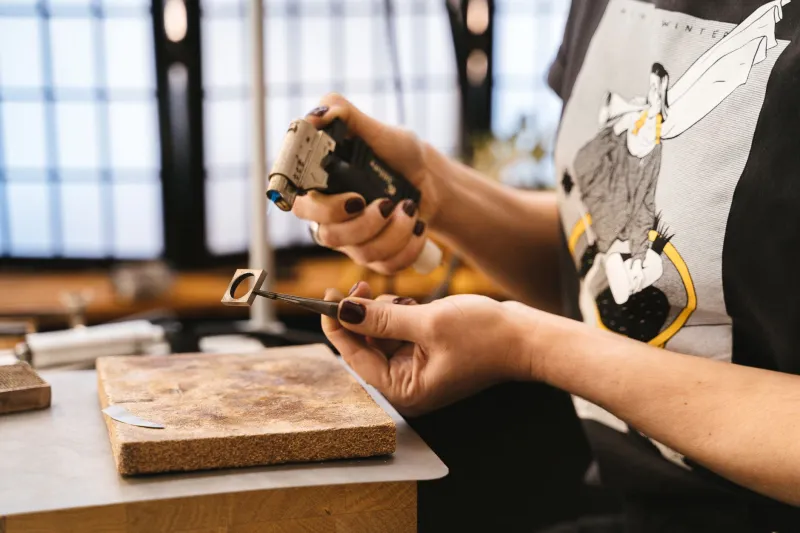
Somewhere in the midwest, a ceramicist is making a very good living selling work almost exclusively to people who collect pieces inspired by mid-century industrial architecture. Her Instagram following would barely register as a rounding error for a mid-tier influencer. Her waitlist is eight months long.
In Brooklyn, a graphic designer has built a newsletter around the typography of American protest movements — specifically, the evolution of hand-lettered signage from the civil rights era through Standing Rock. He has fewer than four thousand subscribers. He turned down two agency jobs last year.
These aren't flukes. They're the early signal of something structural.
The Viral Dream Is Aging Badly
For a solid decade, the implicit promise of digital creative life was reach. Go viral. Build a following. Cast the widest possible net and let the numbers justify the work. Platforms were built around this logic. Algorithms were tuned to reward it. An entire generation of creatives internalized it as the only viable path to sustainability.
The cracks in that model are now visible from space. Viral reach is increasingly expensive to maintain, algorithmically fragile, and — crucially — terrible at converting to actual economic relationships with an audience. You can have a million followers and struggle to sell five hundred prints. You can have forty thousand TikTok fans and find that none of them know what your work actually costs or why.
The creators quietly exiting this hamster wheel aren't doing it because they gave up. Many of them are doing it because they ran the numbers and realized the math of mass appeal was never working in their favor.
Hyper-Specific and Thriving
The alternative looks, from the outside, almost counterintuitively small. We're talking about artists and designers who've essentially chosen a lane so specific that most people would assume it's commercially suicidal — and found the opposite to be true.
The logic isn't complicated once you see it. A general audience gives you attention. A specific audience gives you investment. When someone finds the one creator in the world who makes exactly the thing they care about, in exactly the way they care about it, the relationship that forms is categorically different from the parasocial fandom that mass reach produces. These people buy things. They tell their friends — the right friends, the ones who'll also buy things. They stick around across platform changes and algorithm shifts because they're not following a feed, they're following a person whose specific obsessions match their own.
This is what Kevin Kelly was gesturing at with his thousand true fans theory back in 2008, but the current version is more granular and more sustainable than that framing suggested. It's not just about quantity of dedicated fans. It's about the specificity of the connection. The tighter the niche, the more indispensable the creator becomes within it.
This Isn't Your Dad's Underground Scene
It's tempting to read this as a digital version of old-school underground culture — zines, local scenes, the proud obscurity of making work for a small in-group. There are surface similarities, but the differences matter.
Previous underground scenes were underground partly by necessity. Limited distribution, limited funding, limited ways to reach even the people who would've cared. The smallness was often imposed, not chosen.
What's happening now is different because it's chosen smallness operating on global infrastructure. The ceramicist in the midwest isn't limited to selling to people within driving distance of her studio. She's limiting herself by subject matter, and then finding everyone in the world who shares that subject matter obsession. The potential audience for "mid-century industrial architecture ceramics" is small in percentage terms but, distributed across three hundred million Americans and a global internet, it's plenty.
This is underground culture with worldwide distribution. Niche sensibility with no geographic ceiling. The combination is genuinely new.
What Gets Lost, What Gets Gained
It would be dishonest to celebrate this shift without acknowledging what it doesn't do well.
Hyper-specific communities can calcify. When you build an audience around a very particular thing, you create real pressure — internal and external — to keep making that very particular thing. The ceramicist who wants to pivot toward something completely different faces a real risk of losing the community that sustains her. The designer who built his identity around one era of American typography might find that exploring anything else reads to his audience as a betrayal.
There's also a legitimate question about whether this fragmentation of cultural production produces genuine artistic ecosystems or just a lot of parallel bubbles that never talk to each other. The cross-pollination that happens when different creative communities bump up against each other — that friction, that unexpected influence — requires some shared cultural space. Hyper-niching can eliminate that.
But here's the counterargument: the monoculture that mass appeal produced wasn't actually that generative either. A thousand specific communities developing their own aesthetics, their own references, their own standards of excellence — and occasionally colliding — might produce more interesting culture than everyone competing for the same viral moment.
The New Measure of Creative Success
What this moment is doing, more than anything, is forcing a renegotiation of what "making it" looks like for a creative person.
If success used to mean numbers — followers, streams, impressions — the micro-audience model asks a different question: how deeply does your work matter to the people it reaches? That's a harder thing to quantify and a much harder thing to fake.
For a lot of creators, that reframing is liberating. For others, it's terrifying. But the ceramicist with the eight-month waitlist isn't waiting for anyone's permission to call it a career.