Two's a Crowd: The Dirty Secret About Creative Partnerships Nobody Wants to Admit
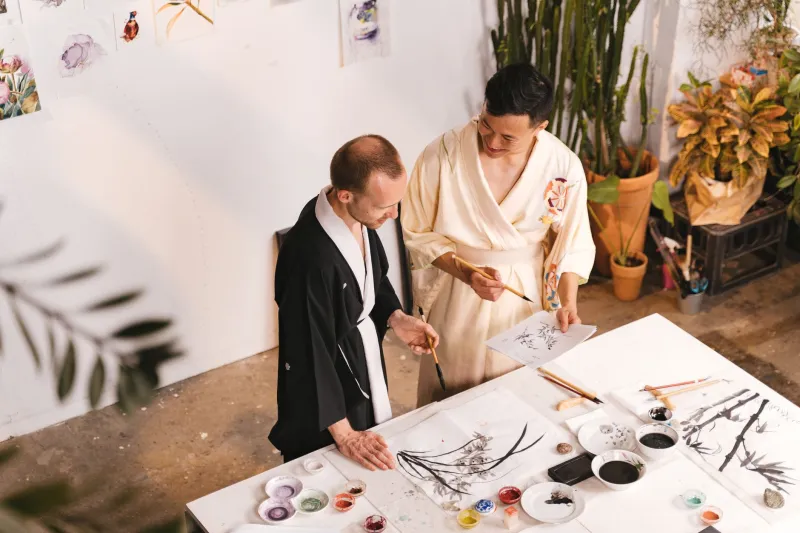
There's a specific kind of excitement that happens when two interesting artists announce they're working together. The internet lights up. The think pieces flow. Everyone starts projecting what the thing is going to feel like before a single frame is shot or a single brushstroke is laid down. And then the project drops, and it's... fine. Competent. Occasionally impressive. But somehow less than the sum of its parts.
That deflation is worth examining, because we keep doing this. The creative industry has developed a full-blown collaboration fetish, and it's costing us some genuinely sharp individual voices in exchange for something that looks good in a joint Instagram announcement.
The Mythology of the Dream Team
Collaboration gets treated like a creative superpower. The narrative is irresistible: two distinct visions collide, sparks fly, and something emerges that neither person could have made alone. Sometimes that's true. The Coen Brothers. Lennon and McCartney for a minute there. Rae Sremmurd before the lawsuits.
But for every partnership that actually works, there are dozens that quietly sand down the edges of both people involved. The problem is we only talk about the wins. Nobody writes the retrospective about the collaboration that turned a genuinely weird, confrontational artist into someone producing polished content for a broader audience. Nobody calls that what it is: a loss.
When Tyler, the Creator was doing Odd Future stuff — chaotic, deliberately offensive, structurally strange — there was something genuinely unsettling and alive about it. As his collaborator list got more prestigious and his brand got more legible, the work got more refined. More palatable. More successful by every conventional metric. Whether it got better depends entirely on what you thought was valuable in the first place.
What Actually Happens in the Room
Here's the thing about creative collaboration that nobody wants to say out loud: most of the time, it isn't two visions merging. It's one vision winning and the other one compromising.
This isn't cynicism — it's just how rooms work. Someone has more leverage. Someone has the bigger platform. Someone has the relationship with the brand partner writing the check. And in that dynamic, the more commercially legible aesthetic tends to absorb the stranger one. The weirder voice gets smoothed out. Not maliciously. Just... gravitationally.
Graphic designers who've spent years building a genuinely eccentric visual language suddenly find themselves producing work that looks like a committee output when they take on high-profile brand partnerships. The client wanted their sensibility, sure, but they also needed it to test well in focus groups. Those two things are incompatible, and the sensibility always loses.
The Industry That Needs This to Work
There's a reason the collaboration myth persists: a lot of people benefit from it commercially. Brands get cultural credibility by association. Platforms get engagement from two audiences instead of one. PR agencies get a story. The collaborative project becomes a product, and products need to be marketable, which means they need to be legible, which means they need to shed whatever was genuinely strange or difficult about the people who made them.
The art world has its own version of this. The prestige group show, the residency collaboration, the co-authored installation. These things have value — community, cross-pollination, shared resources. But they also create a social pressure toward consensus that is actively hostile to the kind of singular, uncompromising vision that produces work that lasts.
Some of the most vital art being made right now is coming from people working almost entirely alone. Not because solitude is inherently noble, but because the work requires a specific kind of stubbornness that evaporates the moment you have to explain yourself to someone else in the room.
The Collaboration That Actually Works
None of this means collaboration is worthless. It means we need to be more honest about what we're asking for when we ask two creatives to make something together.
The partnerships that tend to produce genuinely interesting work share a few characteristics. They usually involve people with complementary skills rather than similar aesthetics — a writer and a visual artist rather than two visual artists. They tend to have clear delineation of who controls what. And they often involve some productive tension, even friction, rather than the seamless creative harmony that looks good in a documentary.
The collaboration that works isn't two people agreeing. It's two people in productive conflict who've found a structure that lets the conflict generate something rather than just exhaust everyone involved.
What We're Actually Losing
Every time a genuinely idiosyncratic creative voice gets absorbed into a collaborative project or brand partnership, we lose something that's very hard to get back. Individual artistic identity is fragile. It takes years to develop and can be diluted surprisingly fast.
The pressure to collaborate — to be a team player, to cross-pollinate, to build community — is real and it comes from good places. But it's worth asking what it costs. The artists who made things that genuinely changed how we see the world were almost always people who spent long stretches being unreasonably committed to a specific, personal, sometimes alienating vision. That commitment requires a kind of isolation that the current creative culture actively pathologizes.
Maybe the dream team is overrated. Maybe the weird person working alone in their apartment at 2 a.m. is where the actual interesting stuff happens. It just doesn't photograph as well for the announcement post.